














VIETNAM
FREE TRADE AGREEMENT PORTAL
Home
News
News
Policy Update
Events - Conference
Local News
Agreements
EVFTA
CPTPP
UKVFTA
WTO
VIFTA
VN - UAE CEPA
All Agreements
Enterprise Support
Online Training
Stories & Practical Cases
Publications - Documents
Market Information
Sitemap
Contact Us
Facebook
Twitter
Youtube
English
Vietnamese
FTA Ecosystem: A strategic infrastructure solution to promote digital transformation and export supply chain finance
The FTAs Ecosystem serves as a comprehensive strategic infrastructure, tightly linking the Government's policy direction with the operational capabilities of the business community.
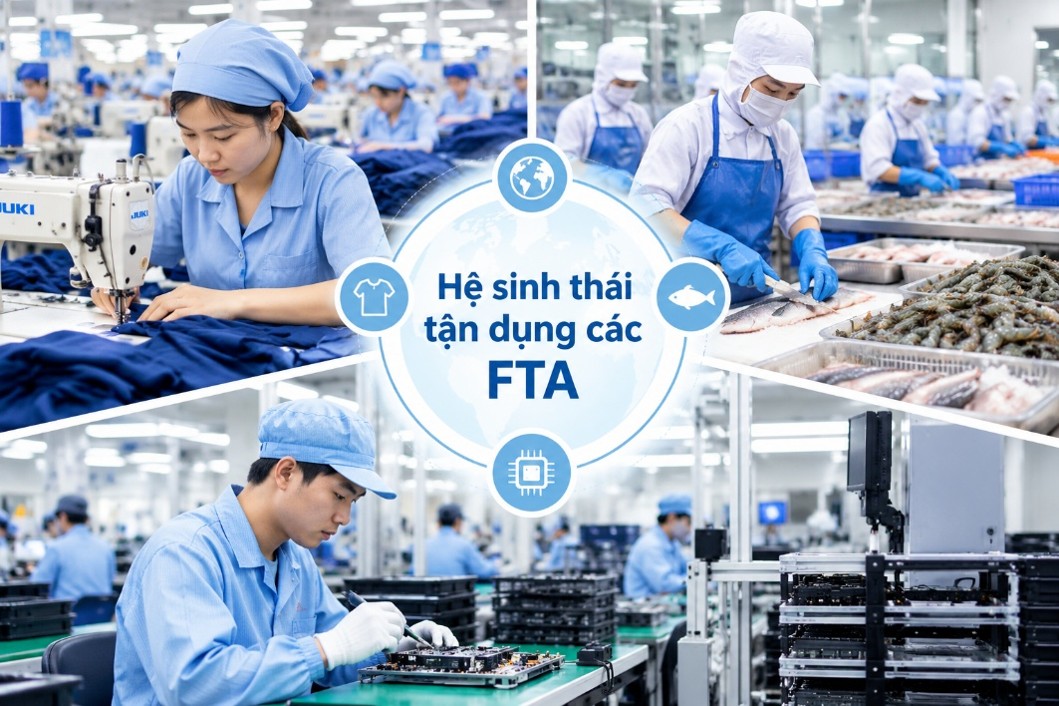
Leveraging the strengths of key export sectors with the support of the FTA Ecosystem
The FTA Ecosystem, approved at Decision No.1253/QD-TTg dated July 10, 2026, plays a vital role in supporting Viet Nam's key export sectors (textiles and garments, agro-aquatic products, electronics, etc.) in overcoming non-tariff barriers and strict rules of origin. By digitizing data, connecting supply chains, providing early warnings, and enhancing compliance transparency, the ecosystem enables businesses to proactively meet international green and technical standards. Consequently, preferential opportunities under free trade agreements are translated into tangible added value, boosting the competitiveness and global standing of Vietnamese brands.
FTA Ecosystem: From strategic infrastructure to a breakthrough drive for the Vietnamese economy in the new era
The FTA Ecosystem is not merely a trade support tool, but strategic infrastructure for enhancing national competitiveness.
The necessity and importance of establishing Trade and Investment Dialogues between CPTPP–EU and CPTPP–ASEAN
Building upon existing FTAs among member partners, the establishment of Trade and Investment Dialogue mechanisms between the CPTPP and the EU, as well as between the CPTPP and ASEAN, represents more than just an expansion of economic diplomacy; it is a necessary step toward reshaping the 21st-century inter-regional trade architecture.
Trade Remedies Commitments under the Viet Nam – UAE Comprehensive Economic Partnership Agreement
The trade remedies commitments under the Viet Nam – UAE Comprehensive Economic Partnership Agreement (CEPA) cover anti-dumping, countervailing, global safeguard and transitional safeguard measures. In addition to reaffirming the rights and obligations under the WTO framework, the Viet Nam – UAE CEPA introduces provisions on notification, consultations, disclosure of information and price undertakings, with a view to enhancing transparency in investigations. The article also examines the transitional safeguard mechanism, compares it with the corresponding mechanisms under the CPTPP and EVFTA, and highlights a number of considerations for businesses.
Priorities for Viet Nam's 2026 CPTPP Chairmanship
The year 2026 marks the first time Vietnam assumes the role of Chair of the Comprehensive and Progressive Agreement for Trans-Pacific Partnership (CPTPP) Commission.
Member Sign In
New Member Sign Up
NEWS ABOUT EVFTA
Fourth Meeting of the Trade Committee under the EU–Vietnam Free Trade Agreement (EVFTA)
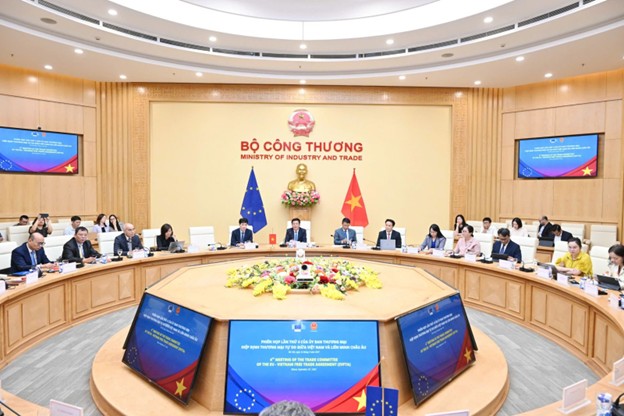
On September 26, 2025, the Fourth Meeting of the EVFTA Trade Committee was held in Hanoi, co-chaired by Minister of Industry and Trade Nguyen Hong Dien and European Commission Executive Vice-President for Trade and Economic Security Maroš Šefčovič. The Vietnamese delegation attending the meeting included representatives from the Ministry of Industry and Trade, Ministry of Foreign Affairs, Ministry of Public Security, Ministry of Health, Ministry of Home Affairs, Ministry of Finance, Ministry of Construction, Ministry of Environment and Algriculture, and the Vietnam General Confederation of Labour. The meeting took place on the occasion of the 35th anniversary of the establishment of diplomatic relations between Vietnam and the EU and the 5th anniversary of the entry into force of the EVFTA. After five years of implementation, the EVFTA has proven to be a key driver in promoting Vietnam–EU trade relations. In 2024, bilateral trade in goods reached a record high of over USD 68 billion, up 16.8% year-on-year, demonstrating steady and resilient growth since the Agreement took effect in August 2020. The EU is now Vietnam’s fourth-largest trading partner, while Vietnam has become the EU’s largest trading partner in ASEAN. Beyond trade, the EVFTA has also contributed to strengthening the Vietnam–EU Comprehensive Partnership, while expanding cooperation in green transition, energy transformation, circular economy, and sustainable development.
EVENTS
Announcement on organising The Fifth Joint Forum on Trade and Sustainable development under Chapter 13 of the Free Trade Agreement between Viet Nam and the European Union (EVFTA)
POLICY UPDATE
Sustainability: Essential to success in the European spice sector
Sustainability has been a priority in the European spice sector for many years. And now, the subject is getting a new boost. This is due to increased commitments from European companies and new regulations in Europe. As a supplier to Europe, sustainable practices are no longer voluntary; they are essential for success.
ONLINE TRAINING
Online training course on "E-commerce commitments in the EVFTA"
DATA & STATISTICS
INFOGRAPHIC: Vietnam's fishery exports to EU increased in the first 8 months of 2025
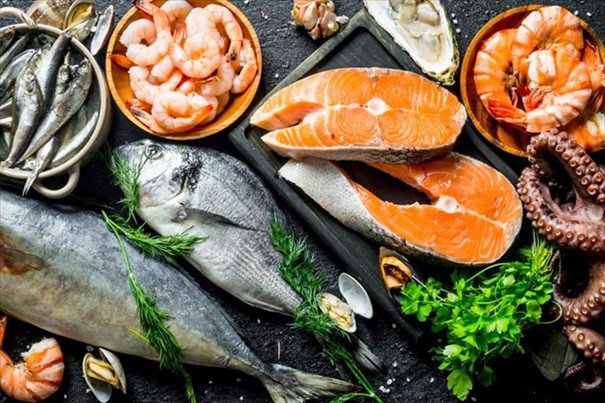
According to data from the Vietnam Customs, Vietnam’s seafood exports in the first eight months of 2025 reached $7.2 billion, up 13.4% from a year earlier. Exports to the European Union totaled $797.9 million, an increase of 23% year-on-year, accounting for 11.1% of the country’s total seafood export value. The Netherlands remained the largest market within the bloc, with export turnover of $144.7 million, up 6.2% from the same period last year and representing a share of 18.1%. Full-year seafood exports in 2025 are forecast to reach around $10 billion.
STORIES & PRACTICAL CASES
Success stories and lessons learned from promoting trade with some FTA markets in the European region
Europe is an important market for cashew products from Vietnam. European cashew imports have been stable over the years, mainly due to the consumer trend towards a healthier lifestyle. The Netherlands, Germany, the UK and the developing markets in Central and Eastern Europe offer opportunities for suppliers from developing countries. Food safety certifications together with corporate social responsibility (CSR) standards can bring great advantages to exporters from developing countries.
AGREEMENT TEXT
COUNCIL & COMMITTEES
IMPLEMENTATION PLAN
MAIN COMMITMENT
PUBLICATIONS
LEGAL DOCUMENT
MARKET INFORMATION
Australia
Austria
Belgium
Canada
Croatia
Cyprus
All Markets
Viet Nam Ministry of Industry and Trade. All rights reserved.