










Analysis of Obligations under the Dispute Settlement Chapter of the Comprehensive Economic Partnership Agreement (CEPA) between Viet Nam and the United Arab Emirates (Part I)
Thursday, 16/10/2025
1. Obligations of cooperation, consultation, and mediation
Articles 17.1 and 17.2 emphasize the obligation of the Parties to cooperate in ensuring a common understanding and uniform application of the Agreement. The Parties shall make every effort to prevent and resolve any dispute that may arise through dialogue and coordination with a view to reaching a mutually satisfactory solution. This principle serves as the cornerstone of the entire dispute settlement mechanism, requiring the Parties to act in good faith and maintain regular channels of communication throughout the implementation of the Agreement.
Under Article 17.3, this Chapter applies only to disputes concerning the interpretation or application of the Agreement where one Party considers that the other Party has adopted or maintained a measure inconsistent with its obligations or has otherwise failed to carry out its obligations under the Agreement. Non-violation complaints or matters arising from other situations are excluded from its scope. Accordingly, the Parties are required to respect this limitation and may only initiate proceedings within the bounds of clearly defined obligations.
Articles 17.4 and 17.5 establish administrative obligations to ensure transparency and efficiency in the exchange of information. Each Party shall designate a contact point to receive and transmit all requests, notifications, and documents relating to disputes. Before requesting consultations or mediation, a Party may seek information concerning the measure at issue, and the requested Party shall respond in writing within 20 days. This mechanism aims to prevent misunderstandings and allows the Parties to clarify the situation before formally commencing dispute settlement procedures.
Article 17.6 provides that consultations constitute the first step of the dispute settlement process. The requesting Party shall submit a written request stating the reasons for the consultations, identifying the measure at issue, and providing the legal basis of the claim. The requested Party shall reply within 10 days, and consultations shall be held within 30 days (or within 15 days in urgent cases). During consultations, the Parties are obliged to provide all relevant information, cooperate in good faith, and ensure the confidentiality of the discussions. If consultations fail to produce a resolution, or if the requested Party fails to respond, the requesting Party may proceed to request the establishment of an arbitration panel.
Article 17.7 introduces mediation as an additional and voluntary mechanism that may be invoked at any stage by mutual consent of the Parties. All proceedings and information exchanged during mediation shall remain strictly confidential and shall not be used in subsequent proceedings. Where both Parties agree, mediation may proceed concurrently with arbitration. This obligation reflects the commitment to maintaining open channels of dialogue and adopting flexible solutions without disrupting bilateral economic relations.
2. Obligations relating to the establishment and operation of the arbitration panel
Articles 17.8 to 17.10 set out the specific obligations concerning the establishment of the arbitration panel. A requesting Party may only seek the establishment of a panel when consultations have failed or have not been conducted within the prescribed time limits. The request shall be made in writing, specifying the measure at issue and the legal basis of the claim. Upon receipt of the request, each Party shall appoint one arbitrator within 30 days. If a Party fails to do so, the arbitrator of that Party shall be appointed by the other Party. The two arbitrators shall endeavour to agree on a Chairperson within 15 days; failing such agreement, the Chairperson shall be selected by lot in the presence of representatives of both Parties. Within 15 days of its establishment, the panel shall determine whether the case is of an urgent nature.
Articles 17.11 and 17.12 provide for the independence and competence of arbitrators. Each arbitrator shall possess expertise in law or international trade, act independently, and not take instructions from any organization or government. Arbitrators shall comply with the Code of Conduct set out in Annex 17B and shall be selected on the basis of objectivity, fairness, and reliability. Should an arbitrator withdraw or become unable to serve, the Party that appointed that arbitrator shall designate a replacement within 30 days (or 15 days in cases of urgency).
3. Obligations during the hearing and in providing information
Articles 17.13 to 17.17 lay down detailed obligations during the adjudicative phase. The arbitration panel shall make an objective assessment of the facts and determine the consistency of the measure at issue with the provisions of the Agreement. The Parties are required to cooperate, provide information and documentation, and participate fully in the proceedings as requested. Pursuant to Article 17.15, the panel shall interpret the provisions of the Agreement in accordance with customary rules of public international law on treaty interpretation. The Parties shall respect the panel’s interpretation and shall neither add to nor diminish the rights and obligations established in the Agreement.
Article 17.16 provides for confidentiality. The deliberations of the panel and documents submitted shall be kept strictly confidential, and the Parties are prohibited from engaging in ex parte communications with the panel. The burden of proof is clearly allocated: the complaining Party must establish that the measure of the other Party is inconsistent with the Agreement, whereas a Party invoking an exception bears the burden of proving the legal basis of that exception. Decisions of the panel shall be made by consensus or, where consensus cannot be reached, by majority vote, and shall be binding upon the Parties.
Under Article 17.17, the panel may seek information or technical advice from the Parties or from any other source it deems appropriate. The Parties are required to respond fully and in a timely manner and shall be given the opportunity to comment on any information obtained by the panel. These provisions ensure objectivity, balance, and transparency in the proceedings.
4. Comparison with the dispute settlement mechanism under the EVFTA
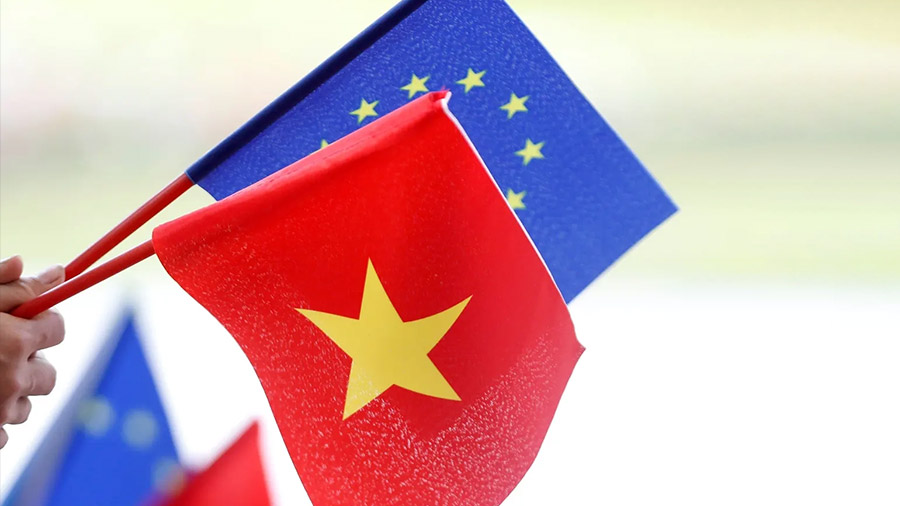
When compared with the dispute settlement mechanism of the EU–Viet Nam Free Trade Agreement (EVFTA), the provisions of the CEPA display a similar structure but are designed to be more flexible.
First, both CEPA and the EVFTA require a mandatory consultation phase before the establishment of an arbitration panel, reflecting the principle of “conciliation first, arbitration second.” However, the EVFTA provides more detailed rules on time limits and procedures (30 days from the receipt of the request, or 15 days in urgent cases) and requires written exchanges between the Parties while maintaining confidentiality throughout. CEPA adopts a similar approach but allows the Parties to agree flexibly on the form and timing of consultations.
Second, with respect to the structure of the arbitration panel, the EVFTA establishes a permanent roster of 15 arbitrators appointed in advance by the Joint Committee, ensuring readiness and independence. CEPA does not provide for a standing roster, instead allowing the Parties to appoint arbitrators on a case-by-case basis.
Third, regarding confidentiality and transparency, the EVFTA provides for a higher level of openness—hearings are open to the public and panel reports are published after issuance, except for confidential parts—whereas CEPA maintains full confidentiality throughout consultations, mediation, and arbitration.
Fourth, concerning cooperation, information sharing, and evidentiary obligations, both agreements contain similar requirements. However, the EVFTA prescribes more detailed procedural steps for submissions, responses, time limits, and the rights of the Parties during the proceedings. CEPA simplifies these processes, reducing administrative burdens and costs while increasing flexibility.
Finally, regarding the degree of legal formalization and overall objectives, both agreements aim to ensure consistency in the implementation and interpretation of their provisions.
Source: Multilateral Trade Policy Department – Ministry of Industry and Trade